










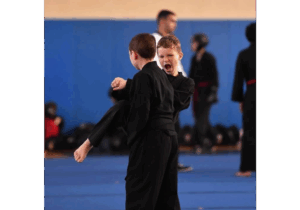
Big emotions are part of childhood.
Frustration. Disappointment. Nervousness. Excitement that tips into overwhelm. Anger that comes out faster than words.
Most parents don’t need to be told that kids feel deeply. What’s harder is knowing what actually helps when emotions take over.
We often focus on teaching kids what to do after something goes wrong. Apologize. Calm down. Try again next time. While those steps matter, they don’t address the skill that sits underneath all of it.
That skill is emotional control.
Not emotional suppression.
Not ignoring feelings.
Not “being tough” or staying quiet.
Emotional control is the ability to pause before reacting, manage big emotions, and stay engaged when something feels hard.
And it’s one of the most important life skills a child can develop.
Why Emotional Control Matters More Than Ever
Today’s kids are growing up in a world that moves fast, demands attention constantly, and leaves very little room for pause.
At school, they’re expected to transition quickly, handle social dynamics, follow instructions, and perform academically. At home, routines are packed, screens are everywhere, and downtime often disappears.
When emotions spike, many kids don’t lack intelligence or motivation — they lack regulation tools.
Research consistently shows that a child’s ability to regulate emotions is strongly connected to:
-
Academic success
-
Positive peer relationships
-
Resilience after failure
-
Lower anxiety and behavioral challenges
In other words, emotional control doesn’t just help kids behave better.
It helps them learn better, connect better, and recover faster.
What Emotional Control Actually Looks Like in Kids
Emotional control isn’t loud or flashy. In fact, it often shows up quietly.
It looks like:
-
Taking a breath instead of melting down
-
Trying again after a mistake
-
Waiting for instructions instead of rushing
-
Staying present even when frustrated
-
Accepting feedback without shutting down
These moments are easy to miss because they don’t always come with celebration. But they are powerful indicators of growth.
And they don’t happen by accident.
Why Emotional Control Is a Trainable Skill
One of the biggest misconceptions about emotional regulation is that kids either “have it” or they don’t.
In reality, emotional control is a learned skill, just like reading, balance, or coordination.
Neuroscience tells us that the parts of the brain responsible for impulse control and emotional regulation — particularly the prefrontal cortex — are still developing throughout childhood and adolescence. Kids need repetition, structure, and safe practice environments to strengthen those neural pathways.
This is where intentional environments matter.
How Martial Arts Support Emotional Control
In martial arts, emotional control isn’t a side lesson. It’s built into the structure of every class.
Students are regularly asked to:
-
Stop and listen before moving
-
Control their bodies even when excited
-
Stay focused during challenging drills
-
Manage nerves before performing
-
Reset after mistakes instead of giving up
These moments create natural opportunities to practice regulation — not through lectures, but through experience.
A student who rushes a technique learns to slow down.
A student who gets frustrated learns to breathe and reset.
A student who feels nervous learns to stay engaged anyway.
Over time, these small moments stack.
And that’s how emotional control is built.
Why “Calm Down” Doesn’t Work (and What Does)
When kids are emotionally flooded, their brain is in survival mode. Logic and reasoning take a back seat.
Telling a child to “calm down” assumes they already have the tools to do so. Often, they don’t.
What helps instead is:
-
Predictable routines
-
Clear expectations
-
Structured challenges
-
Supportive correction
-
Opportunities to practice staying regulated under pressure
These are the conditions that allow kids to learn how to pause, adjust, and continue — even when emotions are high.
Emotional Control Is Confidence in Disguise
Confidence is often mistaken for being outgoing or fearless.
But real confidence is quieter.
It’s the confidence to:
-
Try even when unsure
-
Handle feedback
-
Stay composed under pressure
-
Recover from mistakes
That confidence is rooted in emotional control.
When kids know they can manage their emotions, they trust themselves more. And that trust carries into school, friendships, and everyday challenges.
What Parents Can Do at Home
You don’t need to fix emotions for your child. You need to help them practice navigating them.
A few simple ways to support emotional control:
-
Create space for pause before reacting
-
Model calm responses when things go wrong
-
Encourage reflection instead of rushing past hard moments
-
Praise effort, not just outcomes
A powerful question to ask at the end of the day is:
“What felt challenging today, and how did you handle it?”
That question builds awareness — and awareness is the first step toward control.
Lessons Beyond the Belt
Emotional control isn’t about perfection.
It’s about progress.
It’s built in moments when kids slow down, reset, and stay engaged — even when things feel hard.
Those moments may be quiet.
But they shape who kids become.
And that’s a lesson that lasts far beyond the mat.
Sources & Research
You can include this section at the bottom of the blog or keep it internal if preferred.
-
Center on the Developing Child at Harvard University. InBrief: Executive Function and Self-Regulation Skills.
-
American Psychological Association. Emotional Regulation and Child Development.
-
Moffitt et al. (2011). A Gradient of Childhood Self-Control Predicts Health, Wealth, and Public Safety. Proceedings of the National Academy of Sciences.
-
Siegel, D. J., & Bryson, T. P. (2011). The Whole-Brain Child.
-
CASEL (Collaborative for Academic, Social, and Emotional Learning). Why Social and Emotional Learning Matters.