










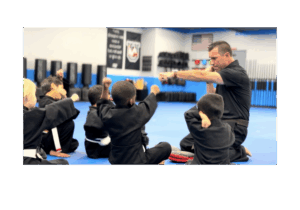
Over time, many parents start to notice small shifts.
Nothing dramatic. No sudden personality change. No overnight transformation.
But something is different.
A child who hesitated before now steps forward a little faster.
A student who once shut down now tries again.
A quiet kid raises their hand.
A frustrated kid takes a breath instead of melting down.
These moments don’t always get celebrated loudly, but they matter.
They are signs that confidence is being built, not performed.
Confidence That Needs to Be Seen Doesn’t Last
In many environments, confidence is treated like something that has to be demonstrated outwardly to count.
Speak up. Be bold. Be first. Don’t hesitate.
While those traits can be valuable, they can also create pressure. When kids believe confidence must look a certain way, they may start to fake it, avoid situations where they feel unsure, or measure themselves constantly against others.
That kind of confidence is fragile.
It depends on attention.
It depends on success.
It disappears quickly when things don’t go as planned.
At Freedom Martial Arts, we intentionally focus on something different.
We care more about building confidence internally than displaying it externally.
The Confidence We’re Building Is Quiet… On Purpose
The confidence that lasts is the kind that shows up when no one is watching.
It’s the confidence that helps a child:
- Try again after a mistake
- Stay engaged when something feels hard
- Speak up respectfully
- Handle disappointment without giving up
- Trust themselves in unfamiliar situations
This kind of confidence doesn’t need applause. It doesn’t rely on comparison. It grows through repetition, encouragement, and consistent effort.
And it grows best when kids are allowed to be exactly who they are while they build it.
Why Time and Consistency Matter So Much
One of the most important things parents can understand about confidence is that it is not a one-time achievement.
Confidence doesn’t arrive at a certain belt level.
It doesn’t switch on after one good class.
It doesn’t come from being praised constantly.
It comes from consistency.
From showing up on days when energy is low.
From practicing when progress feels slow.
From learning that effort matters even when results aren’t immediate.
When kids experience this over time, they start to trust the process. And when they trust the process, they trust themselves.
That trust is what carries them forward — not just in martial arts, but everywhere else.
Confidence Carries Beyond the Mat
Parents often tell us that the confidence their child builds here shows up in unexpected places.
At school, kids participate more willingly.
At home, they recover from frustration faster.
With peers, they advocate for themselves more calmly.
In new situations, they approach challenges with less fear.
These changes don’t happen because kids are being told to “be confident.”
They happen because kids are learning how to build confidence through experience.
They’re learning that:
- Mistakes are part of growth
- Effort matters more than perfection
- Progress isn’t linear
- They can handle uncomfortable moments
Those lessons stay with them.
What We Hope Parents Take Away From This Month
If there’s one message we hope parents carry forward, it’s this:
Confidence doesn’t need to be rushed.
Your child doesn’t need to be louder, faster, or more outgoing to be confident. They need time, support, and opportunities to try, safely and consistently.
Celebrate effort.
Notice persistence.
Acknowledge growth, even when it’s quiet.
Those are the moments that build real confidence.
Looking Ahead
As we move into our next theme, we carry this foundation with us.
Confidence is not an end point. It’s something kids continue to build as they learn to manage emotions, handle setbacks, and stay committed to their goals.
What we’ve focused on this month doesn’t disappear. It compounds.
That’s the beauty of building skills instead of chasing outcomes.
And it’s why confidence , the kind that lasts, will always be one of our most important Lessons Beyond the Belt.
Sources & Further Reading
Dweck, C. (2006). Mindset: The New Psychology of Success. Random House.
Research on growth mindset shows that children develop lasting confidence through effort, persistence, and learning rather than performance, praise, or comparison.
Ryan, R. M., & Deci, E. L. (2000). Intrinsic and Extrinsic Motivations: Classic Definitions and New Directions.Contemporary Educational Psychology, 25(1), 54–67.
Self-Determination Theory explains how internal confidence grows when children feel supported, competent, and safe to try without pressure to perform.
American Academy of Pediatrics. (2018). Helping Children Build Resilience.
The AAP highlights the role of consistency, routine, and manageable challenges in building emotional regulation, confidence, and resilience in children.
Lakes, K. D., & Hoyt, W. T. (2004). Promoting Self-Regulation Through School-Based Martial Arts Training. Journal of Applied Developmental Psychology, 25(3), 283–302.
This study links martial arts training to improvements in self-control, emotional regulation, and confidence that transfer beyond the training environment.